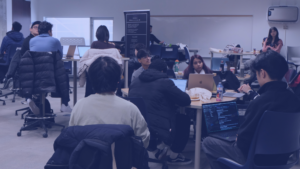
Momentum is building fast around autonomous agents. In Vancouver, the Agentics Foundation is turning that momentum into something tangible. Each meetup brings together builders who aren’t just experimenting, but actively pushing the boundaries of how agents think, adapt, and collaborate. The result is a space where ideas are tested in real time, assumptions are challenged, and the conversation moves beyond theory into what actually works when you try to ship.
A Community that Builds
The Agentics Foundation is a network of local chapters running monthly meetups for people who are actively building multi-agent systems and need to compare notes with others doing the same, engineers showing what they built, what broke, and what they learned.
Vancouver’s chapter benefits from proximity to both academic research and companies deploying agents in production. That mix produces better conversations than you’d get in a room full of only academics or only startups. What’s working is the cross-pollination. Someone presents a framework for orchestrating multi-agent workflows. Someone else asks how it handles observability at scale. A third person mentions they solved a related problem differently and offers to share code. By the end of the evening, three people who didn’t know each other an hour ago are comparing notes on retry logic strategies.
This community encourages to fuels agentic conversations that needs to be talked about. It unlocks perspectives that hasn’t been considered or thought of to the agentic community in the hopes that this gains momentum for autonomous agent that think, adapt and collaborate.
Agentic Frameworks Going Above and Beyond
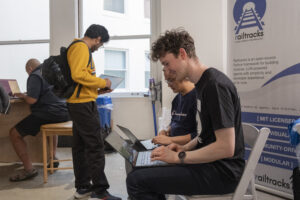
Railtracks, a Python-first agentic framework, demonstrated orchestration plumbing: how to coordinate multiple agents reliably, handle failures gracefully, and maintain observability without drowning in logs. For engineers who’ve moved past single-shot LLM pipelines and into multi-step, multi-agent workflows, these are the problems that actually determine whether something ships.
Logan Underwood, ML Engineer, emphasized in his demo how Railtracks enable orchestration of autonomous agents at scale. What stood out wasn’t just the framework itself, it was how Railtracks opened a new light on how frameworks could be used. Most agentic tooling optimizes for the happy path: the elegant chain of reasoning that works when everything goes right. Railtracks optimized for production reality: what happens when the API rate-limits you mid-workflow, when a tool returns malformed JSON, when an agent gets stuck in a reasoning loop.