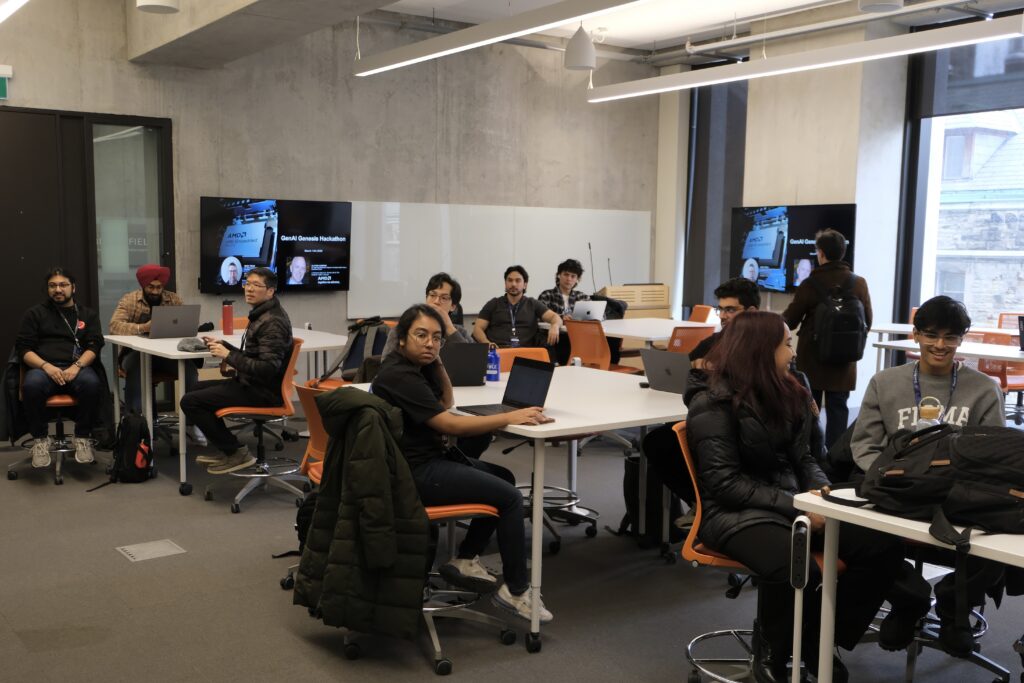
Agentic AI has moved from conference keynotes into pull requests and nowhere was that more visbile than at GenAI Genesis 2026, Canada’s largest AI hackathon. With 800+ hackers across 55 teams drawing from the University of Toronto, University of Waterloo, University of Alberta, Carleton University, University of Manitoba, and Seneca College, the event produced 250 submissions over a single weekend. What those submissions revealed wasn’t just technical ambition. It was a clear picture of where agentic development is heading, and how fast.
Two Patterns, One Direction
The 250 project submissions that came out of the weekend clustered around two architectural approaches: fully autonomous agents and human-agent interaction systems. Both are legitimate responses to the same underlying challenge: how do you build AI that does something useful, reliably, without falling apart at the edges?
Autonomous agents push the boundary of what’s possible without human intervention. They require careful orchestration, robust error handling, and a high tolerance for debugging things that fail in non-obvious ways. Human-agent interaction systems trade some of that autonomy for stability, keeping a human in the loop as a check against compounding errors.
The fact that both patterns were well-represented — and well-executed — says something important: developers aren’t just experimenting with agentic AI conceptually. They’re making real architectural decisions about it, weighing trade-offs, and building systems that reflect those choices. That’s a different level of maturity than we saw even a year ago.
The Problems Worth Solving
What teams chose to build matters as much as how they built it. Teams applied agentic architectures to substantive problems: research automation, healthcare workflows, financial analysis, and developer tooling among them.
This is the inflection point that practitioners have been anticipating: the moment when agentic AI stops being a technique in search of a use case and starts being the natural solution to hard problems that didn’t have good solutions before. When a team of students, under time pressure, reaches for an autonomous agent architecture to solve a real domain problem that’s a signal that the paradigm has landed.
Tooling, a quiet yet telling detail
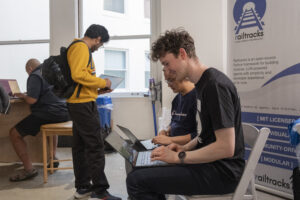
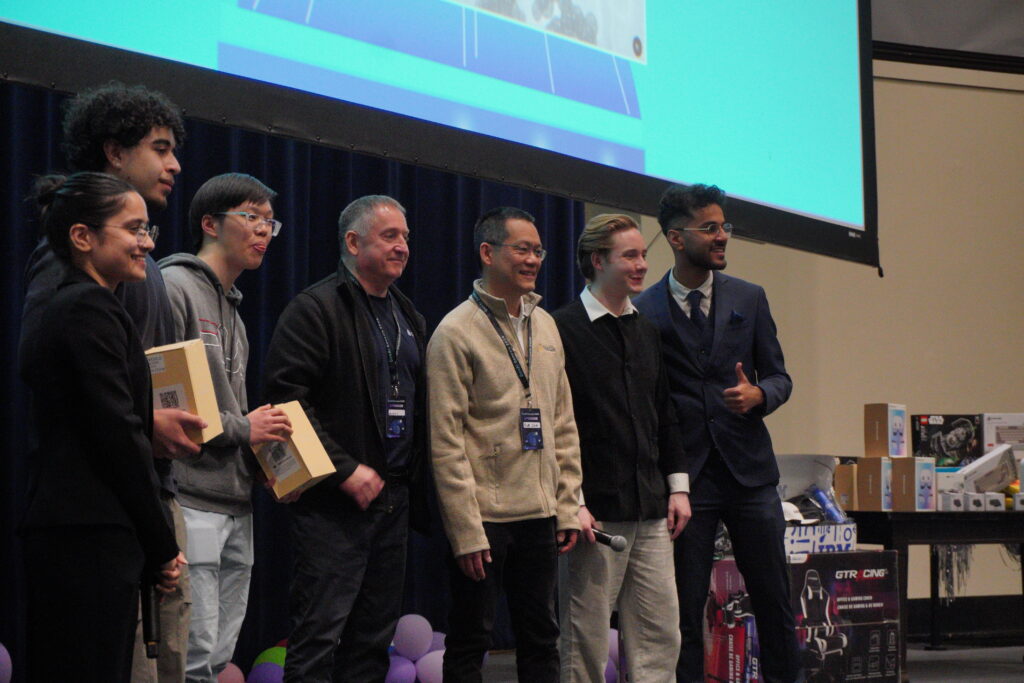
One quiet but telling detail from the competition: 2 of the top 10 teams built with Railtracks. In a field of 55 teams, that kind of representation in the top finishers reflects something real about developer experience under pressure.
Hackers are unsentimental about their tools. The teams that placed well weren’t just the ones with the best ideas, they were the ones who could implement those ideas quickly and reliably. Tooling that supports agentic workflows without introducing its own complexity is part of what makes that possible.
As the agentic ecosystem matures, the tools that earn adoption will be the ones that reduce friction at exactly the moments it matters most. GenAI Genesis is a useful proving ground for that.
What Comes Next
The Canadian developer community building on AI is larger, more distributed, and more technically sophisticated than most people outside it realize. GenAI Genesis 2026 made that visible. Six universities, hundreds of developers, and 250 projects all converging on the same set of questions about how agentic systems should be designed and what they should do.
Those questions aren’t going away. If anything, the answers produced at this hackathon are going to inform real production systems over the next 12 months. The developers who competed this year are the ones building the infrastructure, the tooling, and the applications that will define what agentic AI looks like in practice.